

Jingjin Fan and Daniel Reumann awarded Wellcome Early-Career Awards
Kavli Oxford researchers receive Wellcome Early-Career Awards
We are delighted to share that Kavli Oxford researchers Dr Jingjin Fan (ESIBD Lab) and Dr Daniel Reumann (Stevens Group), have been awarded Wellcome Early-Career Awards.
Dr Fan's research focuses on understanding how membrane proteins are regulated by their molecular environment. These proteins are highly dynamic and can adopt multiple conformational states, some of which are difficult to capture using conventional structural biology approaches. Her project, Capturing Hidden Regulatory Mechanism of Human Membrane Proteins via Soft-landing Mass Spectrometry-Guided Cryo-EM, will develop new ways to integrate native mass spectrometry with cryo-electron microscopy (cryo-EM), using electrospray ion beam deposition (ESIBD)-based soft-landing approaches to help bridge the two techniques. By combining their complementary capabilities, the research aims to provide new insights into membrane protein dynamics and regulation and to expand the range of protein states that can be investigated structurally.
Ultimately, this work seeks to establish new approaches for studying the molecular mechanisms that govern membrane protein function, with potential applications across structural biology and biomedical research.

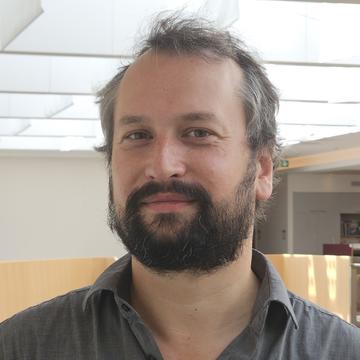
Dr Reumann's project is Neural Sheets: Engineering Next-Generation Human Brain Models via Apicobasal Polarity-Guided Directional Neurogenesis. The five-year study will investigate how the shape and apicobasal organisation of developing cortical tissue influence human corticogenesis – including the production, migration and spatial arrangement of cortical neurons. The project is guided by the principle that form helps define function, particularly in the highly organised architecture of the cerebral cortex.
By combining stem-cell biology with bioengineering, Reumann aims to develop reproducible models in which cortical progenitor tissue is organised into neural sheets, supporting directional neurogenesis and the emergence of features such as cortical layering and grey–white matter organisation. These models could provide new ways to investigate the fundamental processes that shape the developing human cortex and how their disruption contributes to disease.

