Kavli Research and Enterprise Lecture: 'CryoSeek: A Structure-First Paradigm for Discovery'
Join us for a Kavli Research and Enterprise Lecture
hosted by Professor Dame Carol Robinson and Professor Simon Newstead
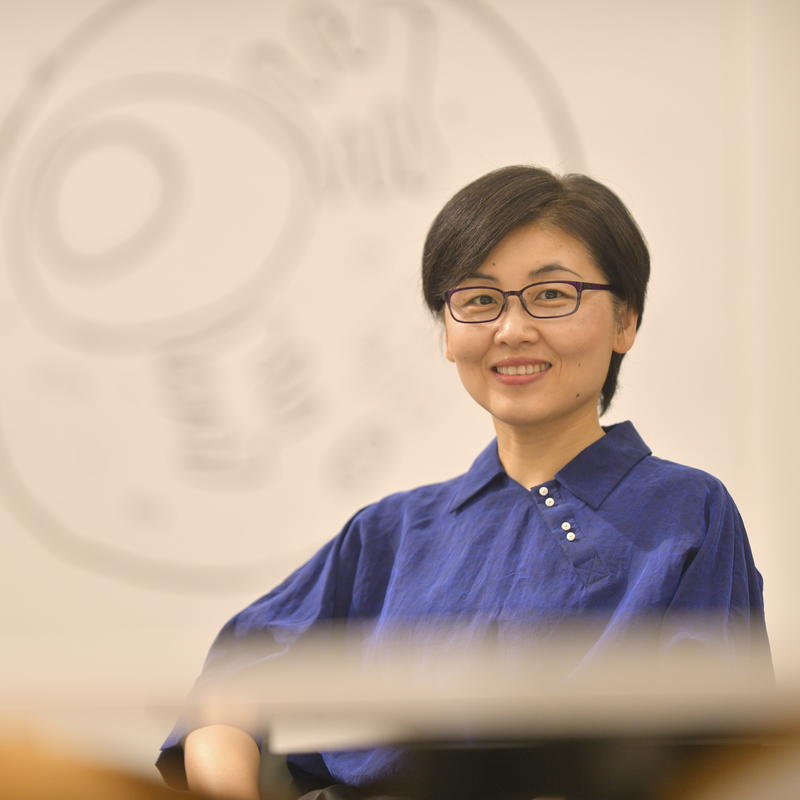
Dr Nieng Yan: 'CryoSeek: A Structure-First Paradigm for Discovery'
With the resolution revolution in single-particle cryo-EM and AI-powered protein structure prediction and design, structural biology has entered a transformative era. In this context, we have developed CryoSeek, a research strategy that shifts the paradigm from structure determination of known targets to structure-first discovery of entirely unknown bioentities.
In essence, we use cryo-EM as a lens to directly observe the natural world. Without requiring prior genetic or biochemical knowledge, CryoSeek applies cryo-EM to minimally processed samples from tissues or environmental sources. We further developed EModelG, an AI-assisted tool suite for automated model building that extends beyond proteins to include glycans and nucleic acids. In proof-of-concept studies on water from the Tsinghua Lotus Pond (TLP), CryoSeek identified and structurally characterized diverse novel fibrils, including TLP-1a/b protein fibrils, glycofibrils with protein cores (TLP-2/3/4/12/IPT), and, remarkably, TLP-0, a fibril composed purely of glycans without any protein component.
These findings demonstrate that glycans can adopt highly ordered structures independent of proteins. As a structure-first paradigm, CryoSeek enables high-resolution structure determination to drive the discovery and characterization of previously intractable 'dark matter of life'.
-
DATE: Thursday, 9 July 2026
-
TIME: 4.30pm, followed by a drinks reception at 5.30pm
-
VENUE: Room 20-138, Dorothy Crowfoot Hodgkin Building, Sherrington Road, Oxford
-
PLEASE NOTE: Entry is strictly on presentation of a University card. Seating is limited.
About the speaker:
Dr Nieng Yan received her BS degree from the Department of Biological Sciences & Biotechnology, Tsinghua University, Beijing, China, in 2000. She then pursued her PhD in the Department of Molecular Biology at Princeton University under the supervision of Prof Yigong Shi between 2000 and 2004. She was the regional winner of the Young Scientist Award (North America) co-sponsored by Science/AAAS and GE Healthcare in 2005 for her thesis on the structural and mechanistic study of programmed cell death. She continued her postdoctoral training at Princeton University, focusing on the structural characterization of intramembrane proteases. In 2007, she joined the faculty of School of Medicine, Tsinghua University. Her lab has been mainly focusing on the structural and functional study of membrane transport proteins. In 2012 and 2013, she was promoted to tenured professor and Bayer endowed chair professor, respectively. She returned to Princeton University as the founding Shirley M. Tilghman Professor of Molecular Biology in 2017. Five years later, she resigned from Princeton University and took on the post of the Founding President of Shenzhen Medical Academy of Research & Translation (SMART) as of December 1st, 2022. Meanwhile, she re-established her research program in School of Life Sciences in Tsinghua University as a University Professor. In March 2023, she was appointed the Director of Shenzhen Bay Laboratory.
Dr Yan’s primary research interest has been in the structural and mechanistic investigation of membrane transport proteins that are of tremendous physiological, pathophysiological, and pharmaceutical significance. She reported the first structures of the human glucose transporters GLUT1 and GLUT3, the eukaryotic voltage-gated sodium and calcium channels, and a number of proteins involved in sterol metabolism. In addition, she has actively explored new research paradigms in structural biology and proposed the “CryoSeek” strategy, through which her team has resolved a series of glycan structures at near-atomic resolution. These studies led to the identification of novel glycan assembly modules and revealed the important roles of glycans in higher-order macromolecular organization. Her current research focuses on exploring the “dark matter of life” using the CryoSeek strategy, and on elucidating the pathogenic mechanisms of ion channel disorders such as pain and epilepsy, along with the development of related therapeutics.
Dr Yan’s achievements have won her numerous accolades. She was an HHMI international early career scientist in 2012-2017, the recipient of the 2015 Protein Society Young Investigator Award, the 2015 Beverley & Raymond Sackler International Prize in Biophysics, the Alexander M. Cruickshank Award at the GRC on membrane transport proteins in 2016, the 2018 FAOBMB Award for Research Excellence, the 2019 Weizmann Women & Science Award, the 2021 Anatrace Membrane Protein Award by the Biophysical Society, and 2024 L'Oreal-UNESCO Award for Women in Science. Dr. Yan was elected as an International Member of the US National Academy of Sciences in 2019, an International Honorary Member of the American Academy of Arts and Sciences in 2021, a member of the Chinese Academy of Medical Sciences in 2022, an associate member of EMBO in 2023, and a member of the Chinese Academy of Sciences in 2023.
Dr Yan's PubMed profile is available here.

