

Recent Doctoral Graduates from the Kavli Institute for Nanoscience Discovery: Dr Féodora Bertherat and Dr Iona Thomas-Wright
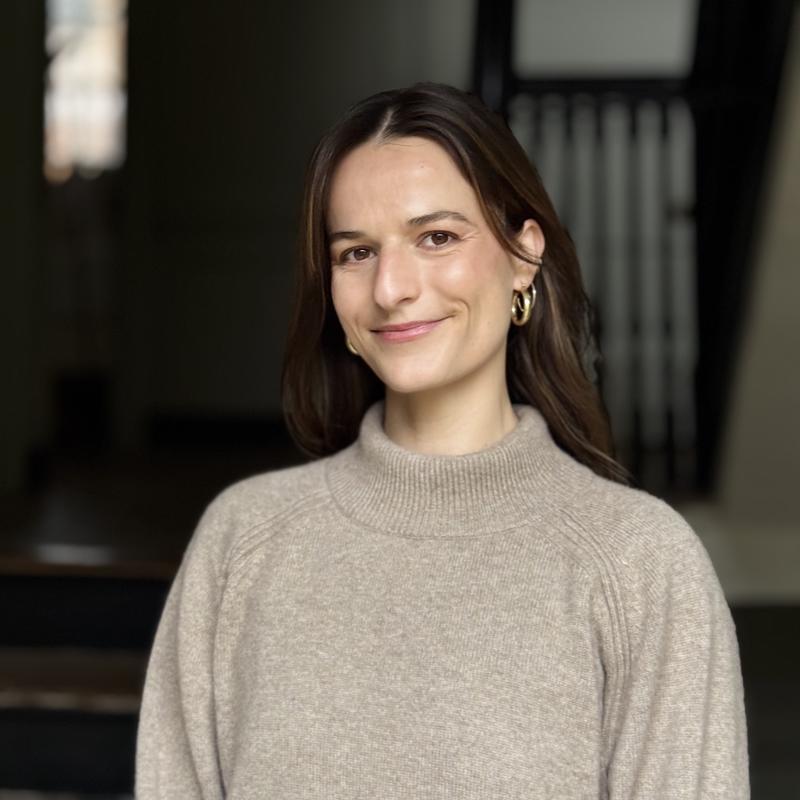
Dr Féodora Bertherat
Thesis title: Understanding the role of Amyloid Beta and Tau protein in neuronal vulnerability in models of sporadic Alzheimer’s disease
Supervisors: Professor Richard Wade-Martins, Dr Becky Carlyle, Dr Nora Bengoa-Vergniory, Dr Sally Cowley
Thesis title: Understanding the role of Amyloid Beta and Tau protein in neuronal vulnerability in models of sporadic Alzheimer’s disease
Supervisors: Professor Richard Wade-Martins, Dr Becky Carlyle, Dr Nora Bengoa-Vergniory, Dr Sally Cowley
Thesis summary: Alzheimer’s disease (AD) is the most common form of dementia and is defined by two key pathological features: the accumulation of amyloid-β (Aβ) plaques and tau-containing neurofibrillary tangles. Most research models have focused on rare inherited forms of the disease (familial AD), but the vast majority of patients have sporadic Alzheimer’s disease (sAD), which is more complex and varies widely between individuals. In my DPhil, I used stem cell technology to grow brain cells (neurons) from patients with sAD. This allowed me to ask whether these lab-grown neurons reflect differences between patients – and whether they respond to disease-related stressors
Human induced pluripotent stem cell (iPSC) models provide an opportunity to study patient-specific disease biology, but it remains unclear whether neurons derived from sAD patients retain meaningful features of the individuals they originate from.
My DPhil investigated whether iPSC-derived neurons from sAD patients capture differences in vulnerability to AD-related pathology, and whether these differences relate to clinical measures of disease. Using cortical neurons derived from 14 sAD patients, I examined responses to Aβ oligomers and tau preformed fibrils across cellular and molecular levels.
Exposure to Aβ led to neurite loss and neuronal death in all lines, but with substantial variability between individuals. Importantly, the degree of vulnerability correlated with relevant clinical measures, suggesting that these neurons reflect patient-specific disease vulnerability. Transcriptomic analysis showed that Aβ exposure triggered broad changes in gene expression, particularly affecting pathways related to synaptic function, axonal projection and oxidative phosphorylation.
I then extended this work to tau, showing that tau levels in these neurons are associated with tau burden in patients. Tau preformed fibril (PFF) exposure also caused neurite loss, which again correlated with clinical measures. However, Tau PFF exposure did not cause any transcriptional changes.
Overall, these findings highlight the value of sAD iPSC models in capturing individual disease variability, with important implications for the development of personalised approaches to AD.
Next steps: I am applying to neuroscience startups/biotechs in London and Zurich.
Insights on interdisciplinarity: Working at the Kavli Institute allowed me to collaborate with and learn from scientists across different fields, making my experience here so much more enriching. It allowed me to integrate molecular, biochemical and computational biology, and helped me grow as a scientist.
Dr Iona Thomas-Wright
Thesis title: Characterising extracellular ⍺-synuclein and its associated release mechanisms in hiPSC-derived dopamine neurons
Supervisor: Professor Richard Wade-Martins
Thesis summary: Inside the brains of people with Parkinson’s disease (PD) there are clusters of a sticky protein called ⍺-synuclein. Scientists think that when this sticky protein moves between brain cells it contributes to the progression of PD and the worsening of symptoms. In my PhD, I identified four genes which control how sticky ⍺-synuclein clumps get out of brain cells, a crucial step for them to move around the brain. I also discovered that some of the ⍺-synuclein protein is chopped up in a characteristic way in the specific type of brain cell which is most likely to die in PD. These findings will allow other scientists to search for medicines that stop sticky protein aggregates moving between cells, and that may slow down the progression of PD.
In PD, ⍺-synuclein, a small intrinsically disordered protein, mis-folds and aggregates causing cellular dysfunction and neurodegeneration. Mis-folded ⍺-synuclein can move between neurons and template further aggregation in a prion-like manner. Studying the brains of people who have died of PD allows us to see large aggregates of ⍺-synuclein, but it is impossible to determine how the ⍺-synuclein travels between neurons.
Human neurons can also be grown in vitro using induced pluripotent stem cell (iPSC) technology, where fibroblasts – skin cells – are converted back to stem cells and then re-differentiated to mature neurons like those found in the brain. In my PhD I used iPSC-derived dopaminergic neurons from patients with PD to investigate how ⍺-synuclein moves between brain cells in vitro. Dopaminergic neurons are the most vulnerable cell type in PD, and I found that they expressed a specific N-terminally truncated form of ⍺-synuclein which was not present in other cell types. Both the N-terminally truncated and full-length forms of ⍺-synuclein were released by dopamine neurons into the extracellular environment. Using a CRISPR interference screen for over thirty genes involved in protein trafficking, I identified four genes responsible for regulating ⍺-synuclein release (SYT1, SNAP23, RAB7A and RAB8A).
In PD patients, secretion of small ⍺-synuclein aggregates from neurons into cerebrospinal fluid provides a valuable biomarker that is increasingly being investigated for diagnostic purposes. Seeded-amplification assays leverage the innate prion-like aggregation of ⍺-synuclein to amplify and detect low-concentration aggregated protein. After optimising this experimental set up for the iPSC dopamine neuron model, I was able to show that cells from people with two different familial PD mutations release more seeding-competent ⍺-synuclein than cells from healthy people. This exciting finding tallies with clinical results, demonstrating how stem cell models can be used to better understand key clinical biomarkers.
Next steps: I am stepping away from academia and perusing my other passion of public health, in particular international health policy. I have just started a policy research and advocacy role in the NGO Menoglobal where I am helping to build a road map for how governments in low- and middle-income countries can integrate menopause care into their national health plans. I am excited to continue to broaden my policy and advocacy experience in health and non-communicable diseases more generally and would be keen to one day work on dementia care policies, inspired by my PhD.
Insights on interdisciplinarity: I benefitted enormously from the collaborative and interdisciplinary environment of the Kavli Institute, where I worked with researchers in both the Kukura and Robinson groups. This enabled me to try a variety of biophysical techniques including mass photometry and native mass spectrometry which were very beneficial to my research project (and fascinating to learn!). The opportunity to work with researchers outside my direct field taught me to clearly explain my science for non-specialists, a skill which will be very valuable in the science communication component of my career.

