
The Kavli Oxford Lecture Award 2025 Honours Dr Daniel Skovronsky for Scientific Achievement and Real World Impact
The Kavli Oxford Lecture Award 2025 Honours Dr Daniel Skovronsky for Scientific Achievement and Real World Impact
The Kavli Oxford Lecture award 2025 recognises Dr. Daniel Skovronsky not only for scientific achievement, but for perseverance and a capacity to translate science and scientific thinking into meaningful real-world impact
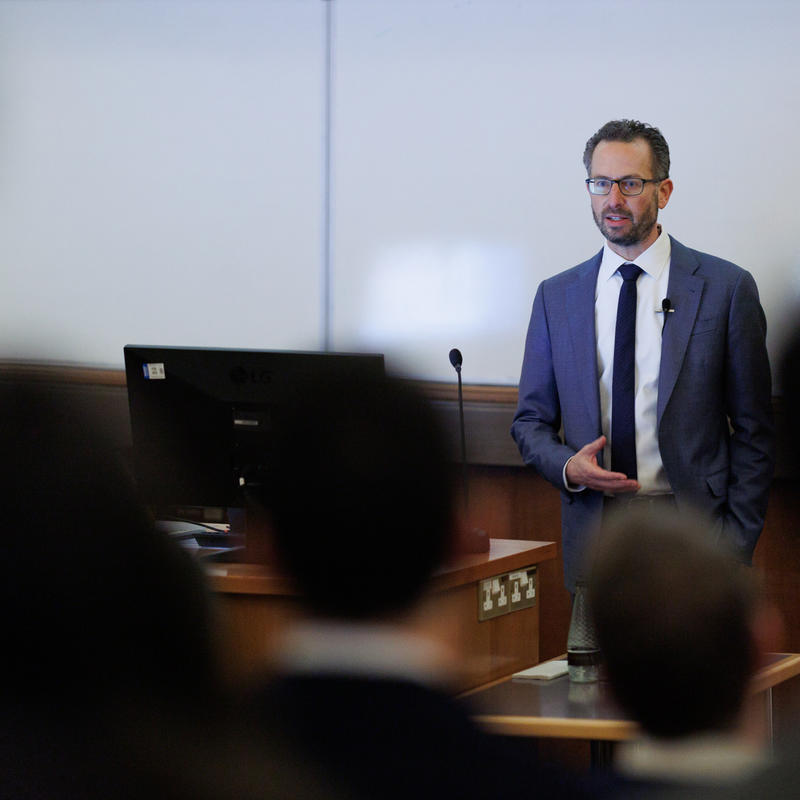
On Monday 24 November, we were delighted to welcome Daniel Skovronsky, M.D., Ph.D., Chief Scientific and Product Officer, Eli Lilly and Company, and President of Lilly Research Laboratories, as keynote speaker and recipient of the fourth annual Kavli Oxford Lecture Award. This award recognises scientific leadership characterised by curiosity-driven research, interdisciplinary thinking, and a commitment to translating fundamental discoveries into real-world benefits.
Professor Dame Carol Robinson opened the lecture by highlighting Daniel’s distinguished career, from pioneering imaging of Alzheimer’s disease in living brain tissue to his recent work in metabolic drug development. She also noted the fitting setting in the Sherrington and Dorothy Crowfoot Hodgkin Buildings, honouring two scientists whose work reshaped modern physiology and insulin science.
His lecture, ‘Harnessing incretin biology to improve human health’, traced the scientific story of gut hormones across more than a century, from the earliest discovery of pancreatic extracts influencing glucose control to the recent development of incretin medicines treating metabolic conditions.
Daniel opened by tracing Lilly’s early involvement in hormone research, beginning with the appointment of Dr George Clowes as the company’s Director of Research in 1920. Clowes’ attendance at Frederick Banting’s 1921 lecture on pancreatic extracts proved pivotal and, within two years, Lilly had developed large-scale insulin extraction methods, enabling 7,500 physicians to treat 25,000 patients. In the 1960s the company expanded this work with the production of glucagon to treat insulin-induced hypoglycaemia.
At the same time, academic research was revealing the role of gut hormones. Important developments in the 1990s included developments to extend half-life and thus reduce frequency of dosing and, from the 2000s, research into combinations of more than one incretin, and different targets.
Daniel emphasised ongoing efforts to develop oral incretin therapies to potentially help treat other disease areas.
Finally, Daniel highlighted how incretin-based science is expanding into research in fields as diverse as psoriasis, schizophrenia and oncology. More broadly, he noted that these advances are helping to transform how patients understand their own health—replacing self-blame with biological insight.
This century-long journey of discovery highlighted in his captivating lecture mirrors Daniel’s own perseverance and commitment to practical impact and is reflected in his selection as the Kavli Oxford 2025 Lecture Award recipient.
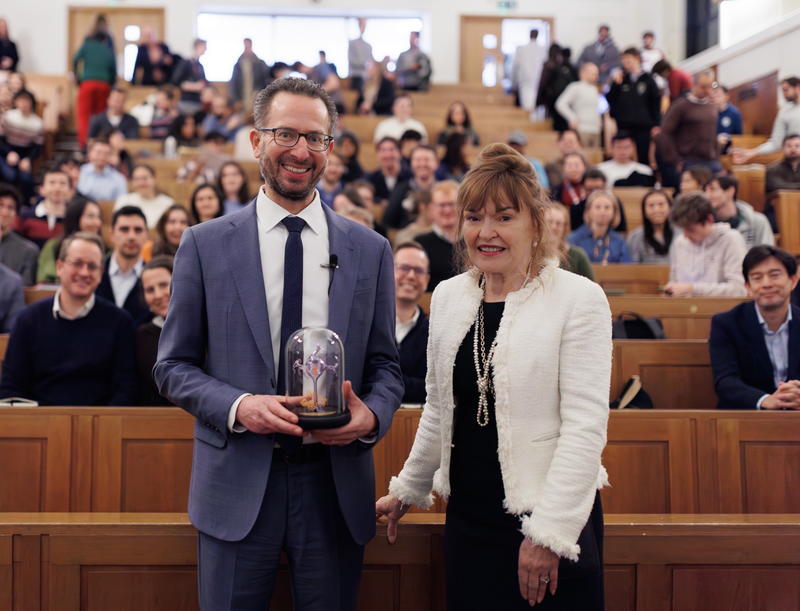
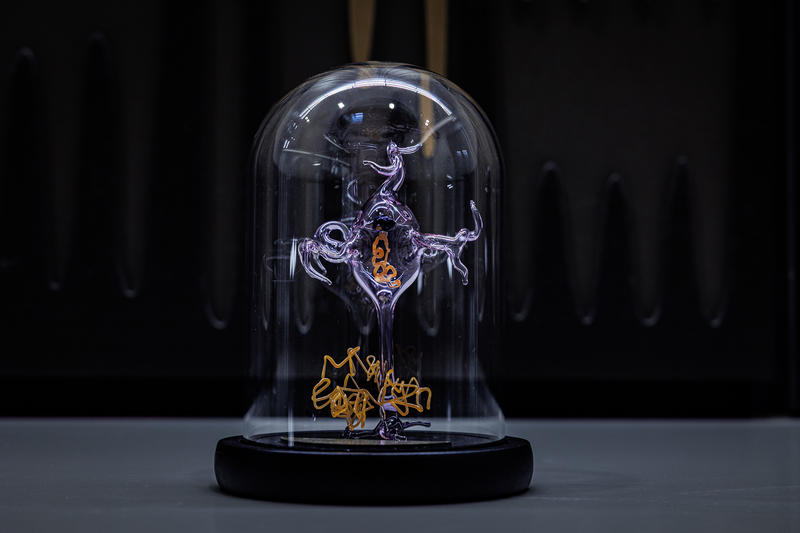
Following the lecture, Dame Carol presented Daniel with a beautiful blown glass neuron with associated amyloid.
This unique award, created by the Department of Chemistry’s Terri Adams, is in recognition of Daniel’s parallel research into the early diagnosis of Alzheimer’s Disease.
The celebration continued with a drinks reception hosted in the Dorothy Crowfoot Hodgkin Building and dinner at Exeter College.

